Oncology Nutrition
Oncology Nutrition Support: How Registered Dietitians Help During Cancer Treatment
6 min read
By ONE Nutrition team
Reviewed by Yesenia Chediak, RDN

A cancer diagnosis can bring physical, emotional, and nutritional challenges that affect daily life and overall well-being.
Treatments like chemotherapy, radiation, and immunotherapy may impact appetite, digestion, hydration, energy levels, and the body's ability to absorb nutrients properly.
At ONE Nutrition, our Registered Dietitians provide personalized, evidence-based oncology nutrition support designed to help patients maintain strength, manage treatment side effects, and support recovery throughout treatment.
Small nutrition strategies can make a meaningful difference in how patients feel during their cancer journey.
Common Nutrition Challenges During Cancer Treatment
Cancer treatment can affect nutrition in many ways. Patients may experience:
- Loss of appetite
- Nausea
- Taste changes
- Fatigue
- Difficulty swallowing
- Weight loss
- Dehydration
- Digestive discomfort
Personalized nutrition support may help patients better tolerate treatment and maintain strength during recovery.
What to Eat During Cancer Treatment
Patients often ask what foods are best during treatment. We recommend:
- High-protein foods: eggs, poultry, fish, Greek yogurt
- Easy-to-digest meals: soups, smoothies, soft grains
- Healthy fats: avocado, olive oil, nut butters
- Hydrating foods: fruits, broths, electrolyte beverages
Why Work with a Registered Dietitian During Cancer Treatment?
Nutrition during cancer treatment is not just about "eating healthy", it is a clinical strategy designed to support your body through intensive therapies.
Our oncology dietitians focus on three key goals:
1. Prevent Complications
We help reduce the risk of:
- Malnutrition
- Muscle loss
- Dehydration
These complications can delay healing and interfere with treatment.
2. Improve Treatment Tolerance
By optimizing your nutrition, your body can better tolerate treatments like chemotherapy helping reduce fatigue and minimize treatment interruptions.
3. Maintain Strength and Energy
We focus on protein and calorie optimization to preserve muscle mass and keep your energy levels stable during treatment.
What Our Dietitians Do for You
Our Registered Dietitians provide personalized strategies tailored to your diagnosis, treatment plan, and symptoms.
1. Side Effect Management
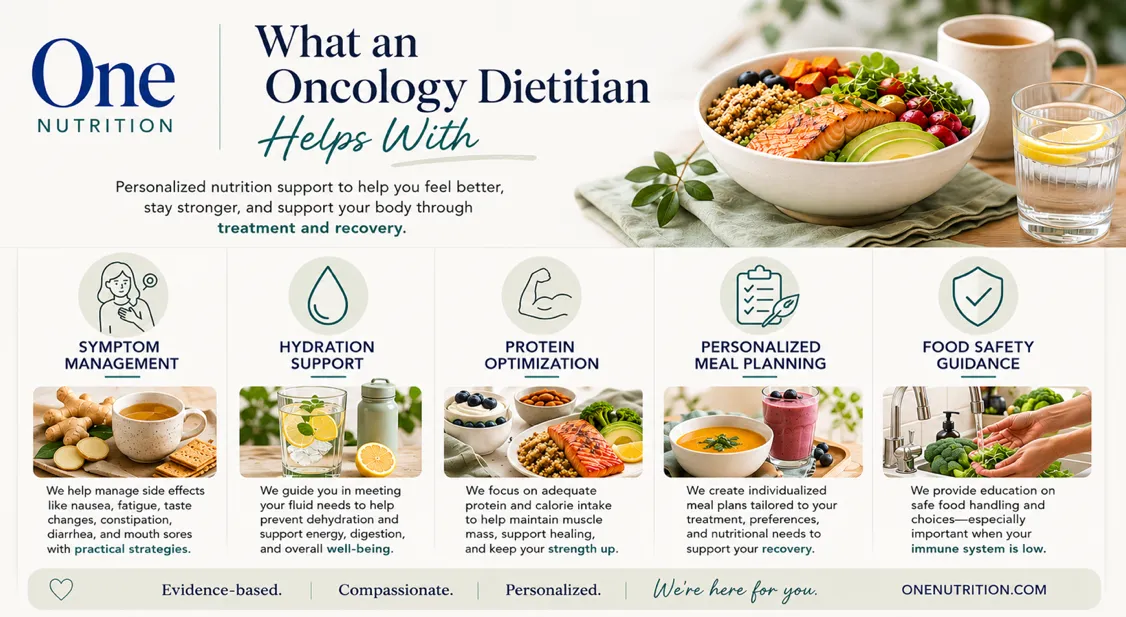
Registered Dietitians play an important role in helping cancer patients manage treatment side effects, maintain strength, and support recovery through personalized nutrition care. Cancer treatments often cause symptoms that make eating difficult. We help manage:
- Nausea: Small, frequent meals and natural remedies like ginger
- Taste Changes: Flavor adjustments to improve food tolerance
- Mouth or Throat Pain: Soft, easy-to-eat foods like smoothies, soups, and mashed options
2. Calorie and Protein Optimization

Cancer increases your body's nutritional needs. We help you:
- Add protein-rich foods to maintain muscle
- Choose nutrient-dense snacks like yogurt, nuts, and eggs
- Replace low-calorie drinks with smoothies or juices
High Protein Foods During Cancer Treatment
Protein may help support:
- muscle maintenance
- recovery
- strength
- healing
Examples include:
- eggs
- Greek yogurt
- salmon
- chicken
- cottage cheese
- nut butters
3. Hydration Strategies

Staying hydrated is critical during treatment.
We help you:
- Reach at least 8 cups of fluid per day
- Identify the best hydration options
- Avoid feeling too full before meals
Hydration and nutrient intake also play an important role in energy, digestion, and overall wellness.
4. Food Safety and Neutropenia Support
For patients with neutropenia (low white blood cell count), food safety is essential.
We guide you on:
- Safe cooking temperatures
- Avoiding high-risk foods
- Proper food handling practices
The ONE Nutrition Difference
Cancer nutrition can feel overwhelming, especially when treatment side effects make eating and hydration more difficult.
At ONE Nutrition, we focus on practical, personalized nutrition support designed around each patient's unique diagnosis, treatment plan, symptoms, and goals.
Our team helps patients:
- Maintain strength and energy
- Improve hydration
- Support recovery
- Manage treatment-related side effects
- Build realistic nutrition habits during treatment
Most importantly, our nutrition services are often covered by insurance, helping make professional support more accessible during a challenging time.
You don't have to navigate nutrition during treatment alone.
Cancer treatment can make eating, hydration, and maintaining your strength feel overwhelming. Our Registered Dietitians provide personalized, evidence-based nutrition support to help you manage side effects, nourish your body, and feel supported throughout your recovery journey.
Whether you're experiencing appetite changes, fatigue, nausea, weight loss, or difficulty eating, our team is here to help you take small, realistic steps that can make a meaningful difference.
- Schedule with a Registered Dietitian
- Verify Your Insurance Benefits
- Virtual Appointments Available Nationwide
Take the next step toward feeling supported, nourished, and empowered during treatment.
Frequently Asked Questions About Oncology Nutrition
Can a dietitian help during chemotherapy?
Yes. Oncology dietitians help manage side effects, improve nutrition intake, support hydration, and reduce the risk of malnutrition during treatment.
What foods help during cancer treatment?
Protein-rich foods, hydration fluids, soft foods, smoothies, soups, and nutrient-dense meals may help support energy and recovery.
Is oncology nutrition covered by insurance?
Many nutrition services are covered by insurance depending on your plan and diagnosis.
What does an oncology dietitian do?
An oncology dietitian provides personalized nutrition guidance to help patients tolerate treatment, maintain weight, manage side effects, and improve quality of life.