Thyroid Health
Thyroid Health Nutrition Support: How Nutrition Can Help Support Hypothyroidism and Hyperthyroidism
7 min read
By ONE Nutrition team
Reviewed by Yesenia Chediak, RDN

Your thyroid may be small, but it has a major impact on how you feel every day.
This butterfly-shaped gland helps regulate metabolism, energy levels, digestion, mood, body temperature, and hormone balance. When thyroid hormones become imbalanced, symptoms can affect nearly every part of daily life.
At ONE Nutrition, we provide personalized, evidence-based nutrition support designed to help patients better understand thyroid health and support long-term wellness through realistic, sustainable nutrition strategies.
Whether you are newly diagnosed or struggling with ongoing symptoms, nutrition may play a larger role than you realize.

Signs Your Thyroid May Need Support
Many people live with thyroid symptoms for months, or even years, before understanding what may be contributing to how they feel.
Common symptoms of hypothyroidism may include:
- Fatigue or low energy
- Weight gain
- Brain fog
- Constipation
- Feeling cold frequently
- Hair thinning
- Dry skin
- Low mood or depression
Common symptoms of hyperthyroidism may include:
- Anxiety or nervousness
- Rapid heartbeat
- Unintentional weight loss
- Increased sweating
- Heat intolerance
- Difficulty sleeping
- Digestive changes
Because thyroid symptoms often overlap with other conditions, personalized healthcare guidance is important for identifying the best support plan.
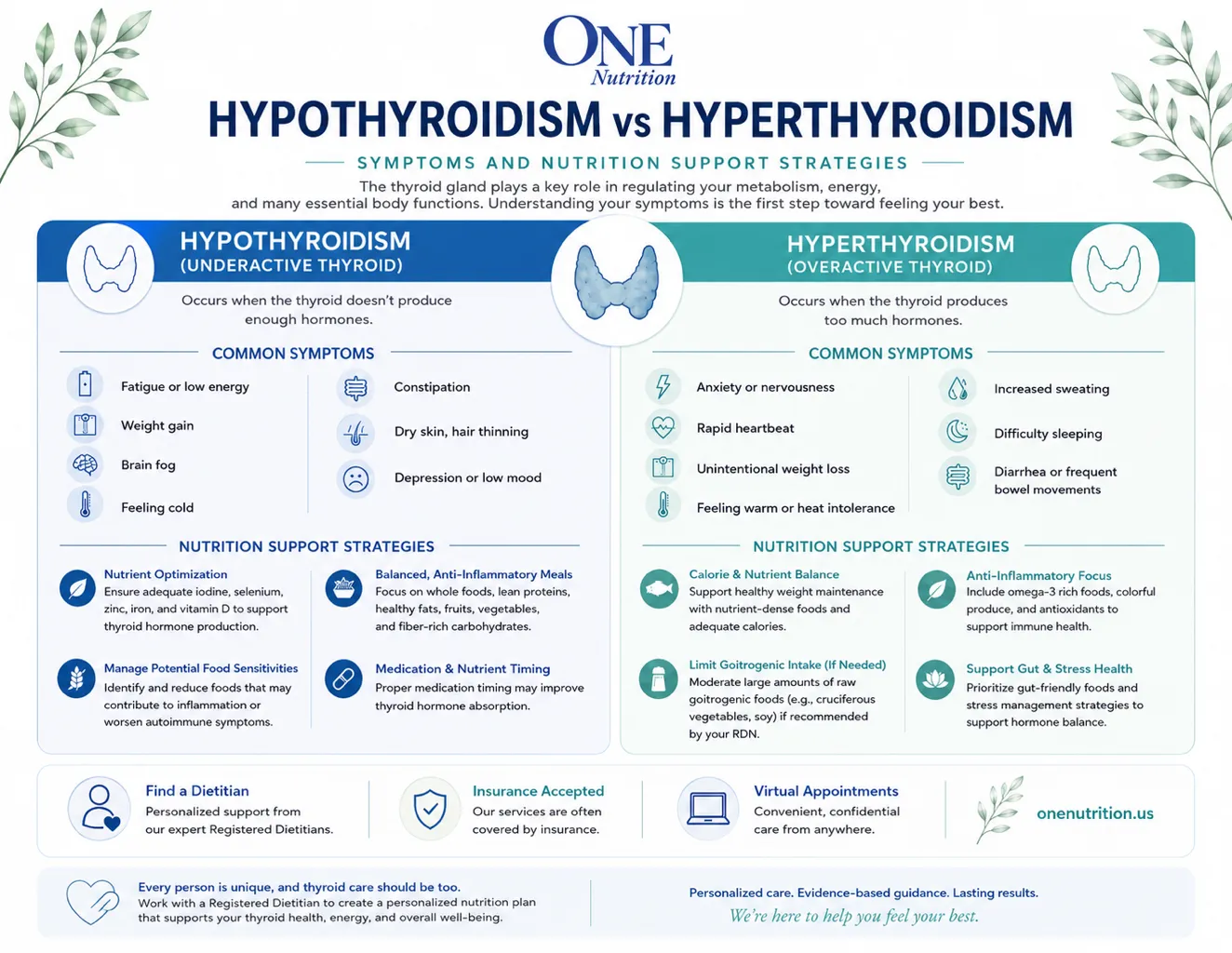
Understanding Hypothyroidism vs Hyperthyroidism
Thyroid disorders generally fall into two categories.
Hypothyroidism (Underactive Thyroid)
Hypothyroidism occurs when the thyroid gland does not produce enough thyroid hormones, slowing down metabolism and energy production.
Hyperthyroidism (Overactive Thyroid)
Hyperthyroidism occurs when the thyroid produces too much hormone, which may speed up body systems and increase stress on the body.
Many thyroid disorders are linked to autoimmune conditions such as:
- Hashimoto's thyroiditis
- Graves' disease
These conditions can affect inflammation, digestion, metabolism, and overall quality of life.
How Nutrition Supports Thyroid Health
Nutrition cannot replace medical treatment, but it can help support:
- Energy levels
- Hormone balance
- Inflammation management
- Digestive health
- Medication effectiveness
- Overall wellness
In today's world of conflicting nutrition advice online, personalized guidance matters.
Our nutrition team helps patients understand realistic strategies that support thyroid health without unnecessary restriction or fad dieting.
Key Nutrients That Support Thyroid Health
The thyroid relies on several important nutrients to function properly.
Iodine
Iodine is essential for thyroid hormone production. However, both low and excessive iodine intake may negatively affect thyroid health, which is why individualized recommendations are important.
Selenium
Selenium supports thyroid hormone metabolism and helps protect thyroid tissue from oxidative stress.
Foods rich in selenium may include:
- Brazil nuts
- Seafood
- Eggs
- Sunflower seeds
Protein and Balanced Meals
Adequate protein intake supports:
- Muscle maintenance
- Metabolism
- Energy levels
- Hormone production
Balanced meals may also help support blood sugar regulation and improve energy stability throughout the day.
Thyroid Medication and Food Interactions
Even small timing mistakes with thyroid medication can affect how well your body absorbs it.

Our nutrition team helps patients understand:
- Medication timing strategies
- Calcium and iron interactions
- Fiber timing considerations
- Supplement interactions
- Meal planning around medication schedules
These small adjustments may help improve medication effectiveness and symptom management.
Anti-Inflammatory Nutrition for Thyroid Support
Because many thyroid conditions are autoimmune-related, anti-inflammatory nutrition may help support overall wellness.
Nutrition strategies may include:
- Omega-3 rich foods
- Lean proteins
- Fruits and vegetables
- Healthy fats
- Fiber-rich carbohydrates
Rather than focusing on restrictive diets, we prioritize sustainable nutrition habits that support long-term health.

Why Patients Work with ONE Nutrition
Managing thyroid symptoms can feel frustrating, especially when fatigue, brain fog, weight changes, and low energy affect daily life.
At ONE Nutrition, we focus on practical, personalized support that helps patients better understand how nutrition, medications, lifestyle habits, and thyroid function work together.
Patients often seek support for:
- Energy and fatigue management
- Weight and metabolism concerns
- Digestive support
- Meal planning guidance
- Thyroid-supportive nutrition education
- Anti-inflammatory nutrition strategies
Most importantly, our nutrition services are often covered by insurance, helping make professional nutrition support more accessible.
Additional Nutrition Support Resources
- Gut Health & Mental Health Connection
- Oncology Nutrition Support During Treatment
- High Protein Meal Ideas for Recovery
- Working with a Registered Dietitian Virtually
Understanding Your Symptoms Is the First Step
Many people spend years feeling "off" before realizing their thyroid may be contributing to their symptoms.
At ONE Nutrition, our team helps simplify the confusion surrounding thyroid health through personalized, evidence-based nutrition support designed around your individual needs and goals.
Whether you are managing Hashimoto's disease, hypothyroidism, hyperthyroidism, or simply looking to better support your overall wellness, our team is here to help guide the process.
Schedule with a Registered Dietitian | Verify Your Insurance Benefits | Virtual Appointments Available Nationwide
Frequently Asked Questions About Thyroid Nutrition
Can nutrition help support thyroid symptoms?
Nutrition may help support energy levels, inflammation management, digestion, and medication effectiveness when combined with medical treatment.
What foods support thyroid health?
Foods rich in selenium, iodine, protein, omega-3 fats, fruits, vegetables, and healthy fats may help support overall thyroid function.
Should I avoid gluten with Hashimoto's disease?
Some individuals may benefit from reducing gluten, but nutrition recommendations should always be personalized.
Can thyroid conditions affect weight and energy?
Yes. Thyroid hormone imbalances may impact metabolism, fatigue, digestion, mood, and weight regulation.
Are thyroid nutrition services covered by insurance?
Many nutrition counseling services may be covered by insurance depending on diagnosis and plan eligibility.