Insurance-Covered Nutrition Care
Do You Need a Doctor's Referral to See a Dietitian? What Insurance Actually Requires
6 min read
By ONE Nutrition team
Reviewed by Yesenia, RDN, LD/N on


Usually, you do not need a doctor referral for a dietitian appointment, but your insurance plan may have its own requirements for coverage. These are two different questions: whether you can book with a dietitian and whether your plan will pay for the visit.
In her billing experience at ONE Nutrition, Yesenia, RDN, LD/N, says referrals are typically not needed for nutrition counseling with many Blue Cross Blue Shield, Cigna, and Aetna plans. Medicare and Medicare Advantage plans are where her team has most often needed to request referrals.
That experience is helpful, but it isn’t a universal rule for every plan. If you’re ready for nutrition support, you can generally reach out to a dietitian’s office directly and ask them to help clarify what your plan requires.
Can you see a dietitian without a referral?
Often, yes. At ONE Nutrition, clients can book directly without first getting a referral or diagnosis. Based on her team’s experience, a referral is not needed in most cases, but individual plan rules can differ.
A referral can still be useful, especially when a health condition is part of the reason for seeking care. But uncertainty about paperwork shouldn’t automatically stop you from asking about an appointment. If a referral turns out to be necessary, ONE Nutrition’s team can contact the doctor’s office after you sign a release of information, or get in touch with you about next steps.
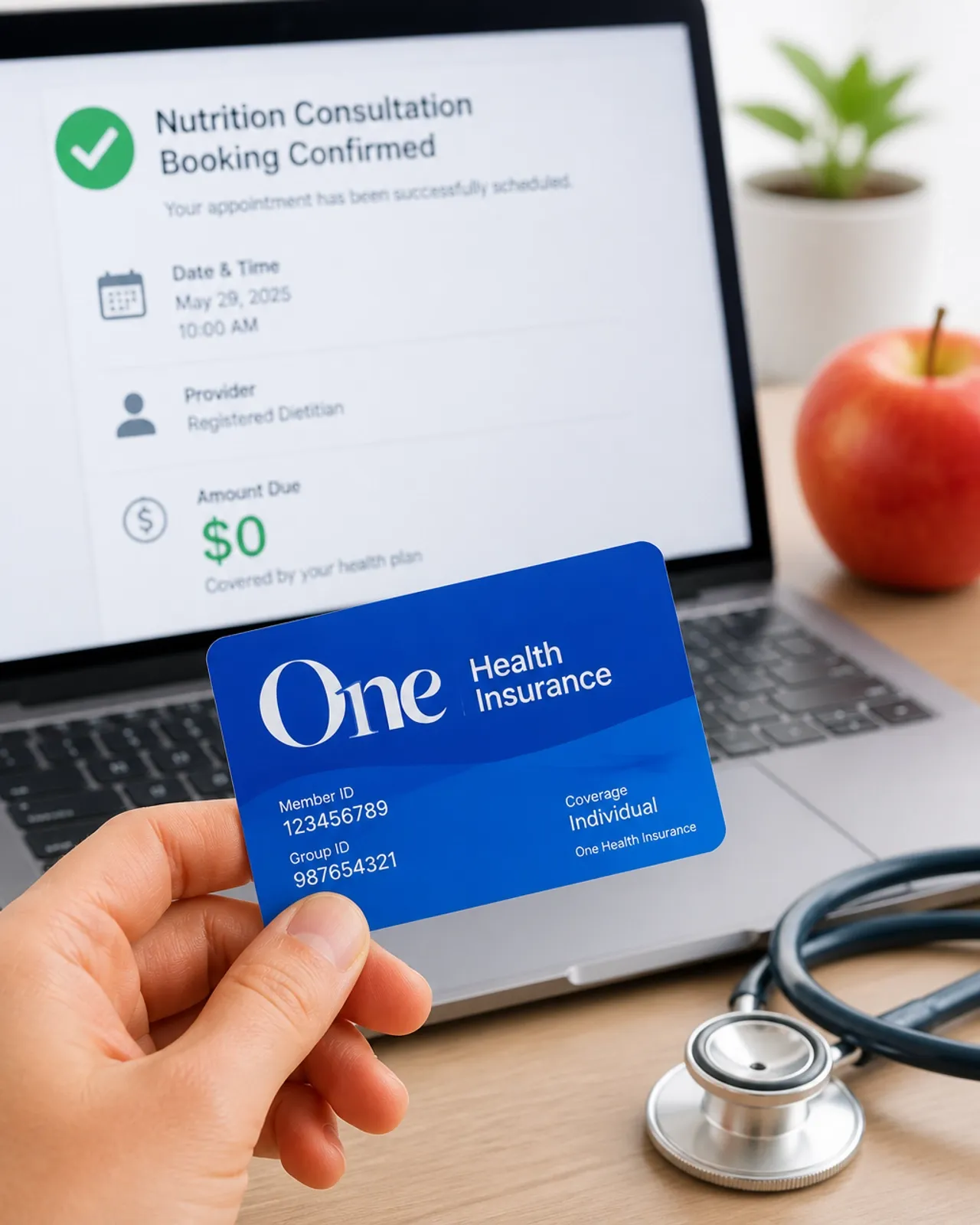
What does insurance actually require?
Insurance requirements depend on your exact plan, not just the name on your insurance card. Even plans from the same insurer may differ based on network, plan type, employer benefits, and the service being billed.
Your plan may require one or more of the following:
- A referral from a primary care provider or another doctor
- A diagnosis or documentation of medical need
- Prior authorization
- Visits with an in-network registered dietitian
- Telehealth coverage for virtual appointments
For Blue Cross Blue Shield, Cigna, and Aetna, ONE Nutrition’s billing experience is that referrals are usually not needed for many clients. Still, check your own benefits. A plan may cover nutrition counseling but require a referral, or allow you to book directly while applying a deductible or other cost-sharing.
Many eligible clients with BCBS, Aetna, and Cigna may have $0 out of pocket for covered nutrition services. The easiest way to see what may apply to your plan is to request a free price estimate: an estimate is not a guarantee of coverage or payment. For more on what affects benefits, read Does Insurance Cover a Dietitian?.
When is a referral required for Medicare?
Medicare has specific rules for its covered medical nutrition therapy benefit. According to Medicare.gov, eligible people with diabetes, kidney disease, or a kidney transplant within the last 36 months need a doctor’s referral for covered medical nutrition therapy.
Medicare Advantage plans may also have plan-specific requirements. ONE Nutrition’s team has found referrals are more often needed for Medicare and Medicare Advantage clients, so it’s wise to check with your plan and the dietitian’s office before the visit.
These rules concern coverage for a particular Medicare benefit; they don’t necessarily mean you can’t ask a dietitian about other ways to access services. For details about nutrition care for health conditions, explore ONE Nutrition’s article on medical nutrition therapy.
What happens if you book without a referral or diagnosis?
You can start by choosing a dietitian or sharing information that helps the team match you with someone who fits your needs. Once your appointment is booked and you complete the required paperwork, you can access ONE Nutrition’s app to communicate with your dietitian or the administrative team, view your appointment, join from your phone, and access resources your dietitian shares.
The team can help sort out questions about referrals and billing along the way. For example, if a referral is needed, they may contact your doctor’s office after you sign a release form, or follow up with you directly.
ONE Nutrition’s process is to provide confirmation of appointment coverage within about a week after your first visit. Keep in mind that a benefits estimate or coverage check is not a guarantee that an insurer will pay a claim.
If you need a referral, what should it include?
When a referral is required, the information sent by the doctor can help the process move more smoothly. Based on Yesenia’s experience, the most important item is the diagnosis the doctor is referring for. The referral should also include the dietitian’s name and ONE Nutrition’s group NPI number.
Relevant lab work and vitals can be helpful when available, but they don’t replace the diagnosis if one is required. The team can let you or your doctor know what details are needed for your specific situation. Having the right information can help, but it cannot guarantee approval; the insurer makes the coverage decision under your plan’s rules.
How it works with ONE Nutrition, step by step
You don't have to figure out your benefits alone, and you don't have to call your insurance company first. Here's the process:
- Get a free price estimate. Enter the subscriber's insurance information exactly as it appears on the insurance card, and ONE Nutrition provides a price estimate before your session, at no cost.
- Schedule your appointment. Book with the dietitian you want to work with, whether or not a referral is involved.
- Get set up in the app. Once your appointment is booked, you gain access to the ONE Nutrition app: communicate with the admin team or your dietitian, get alerts, update your appointment, and jump into your video call. You can also upload documents in a HIPAA-protected environment for you and your personal dietitian to review together.
After your visit, the team follows up to confirm whether the estimate was accurate, so you can confidently continue working with your dietitian on your plan and goals without unexpected charges.

Should you wait to book until you have a referral?
If you’re unsure, reach out rather than assuming you must wait. You can ask the dietitian’s office whether a referral is likely to be needed and what information they need to check your benefits. In Yesenia’s experience, many clients who worry they need a referral don’t, and the team can help clarify the process. Make the appointment. Book with us. Patients don’t regret working with our dietitians. If anything, they regret not starting sooner.
A referral may help coordinate nutrition care with your doctor, and some plans require one for coverage. But it shouldn’t keep you from asking questions or beginning the booking process.
For more evidence-based nutrition guidance, visit the ONE Nutrition blog.
Related Articles
Continue your nutrition journey

Medical Nutrition Therapy for Chronic Conditions: Why a Registered Dietitian Matters
Learn how medical nutrition therapy from a registered dietitian can support chronic conditions like diabetes, hypertension, IBS, and heart health.
•6 min read

The Ultimate Guide to Getting a Virtual Nutritionist Covered by Insurance in 2026
Learn how to get a virtual nutritionist covered by insurance in 2026, including BCBS, Aetna, Cigna benefits, virtual visits, and ONE Nutrition support.
•7 min read

Heart Health and Your Plate: A Dietitian’s Guide to Blood Pressure and Cholesterol
Learn how a DASH-style eating pattern, sodium awareness, fiber, and healthy fats can support blood pressure and cholesterol, with guidance from a Registered Dietitian.
•9 min read